Real Estate
Fractional Ownership in India: History, REITs & AIFs Explained
Discover how fractional ownership in India evolved from communal risk sharing to modern regulated investments like REITs and AIFs



In India, high-quality real estate is no longer just about price; it is about accessibility. Prime assets in cities like Mumbai, Bengaluru, and other cities now require crores in upfront capital. . At the same time, the Alternative Investment Fund (AIF) industry has crossed ₹15 lakh crore in commitments, reflecting investor appetite for pooled, asset-backed structures. structures
At the same time, investors are shifting away from volatile public markets and seeking steady, asset-backed returns.
This gap between aspiration and affordability is why fractional ownership is no longer a niche. It has become essential.
It may sound like a modern concept powered by fintech platforms and digital marketplaces. However, the idea itself is ancient. Long before stock markets, corporations, or even formal money systems existed, people pooled resources to survive, grow, and build.
At its core, fractional ownership means multiple participants contribute capital (or historically, labour and tools) toward an asset and receive proportional rights to its income and appreciation.
In today’s world, this allows investors to access expensive assets, such as real estate, infrastructure, or collectables, without having to purchase the entire asset themselves. Returns from fractional ownership typically come from two sources:
Income - rent, yield, or cash flow generated by the asset
Capital appreciation - growth in the asset’s value over time
Today, fractional ownership is more organised, more transparent, and supported by technology. In a world where assets are expensive and capital is increasingly mobile, this age-old concept feels more relevant than ever.
Early Human Societies: Ownership as Survival
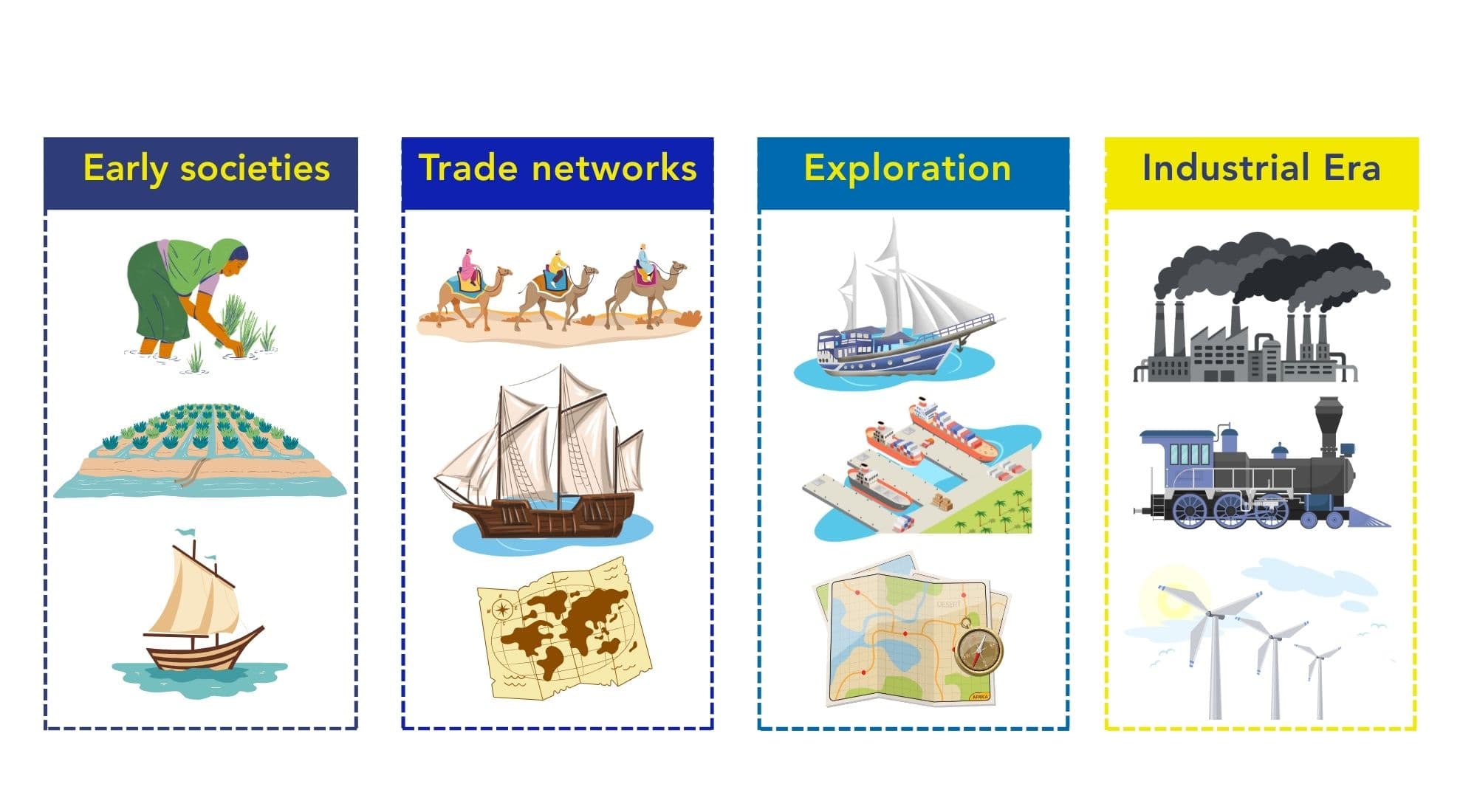
Fractional Ownership: Genesis and History
In early societies, shared ownership was not strategic; it was a necessity. Farming land, building boats, storing food, and constructing irrigation systems required collective effort. No individual had sufficient resources to absorb all the risk on their own.
Production and survival were communal. If crops failed, everyone suffered. If harvests thrived, everyone benefited. Trust was the operating framework.
The Industrial Era: Ownership Meets Scale
The Industrial Revolution marked a structural shift. Factories, railways, and mills required capital beyond the capacity of individuals or small guilds.
Partnerships, cooperatives, and early joint-stock companies became dominant ownership models. Capital pooling enabled industrial scale while distributing financial exposure.
The growth of Cooperatives has transcended from agricultural communities to manufacturing and production centres. In the 19th and early 20th centuries, many countries witnessed the rise of cooperative societies of workers, producers, and consumers. These collective ownership structures pooled resources, shared risks, and enabled growth beyond what individuals could achieve alone.
A recurring pattern emerges across history: when opportunity exceeds individual capacity, fractional ownership becomes the economic solution.
| Era | Asset Type | Ownership Structure | Risk Hanndling |
|---|---|---|---|
early Societies |
Also Read: new insight

Get Our Newsletter
You to create a robust alternate asset portfolio.Related Insights

May Blog
kytkytk

Invest in Holiday Rentals
Find out more on the business of 'holiday rentals' - whether to invest in a second home, or use the holiday rental platforms to enjoy a staycation
centered around current page centered around current page
centered around current page centered around current page centered around current page
A Time-Tested Investment with Evolving Opportunities
Real estate has long been one of the most trusted investment avenues across the world. From owning land and residential properties
Alright, I went through this carefully
Alright, I went through this carefully — the logs actually tell us exactly what’s going wrong 👀 Let’s break it down cleanly and then I’ll tell you the precise fix.
May Blog
kytkytk
Invest in Holiday Rentals
Find out more on the business of 'holiday rentals' - whether to invest in a second home, or use the holiday rental platforms to enjoy a staycation
centered around current page centered around current page
centered around current page centered around current page centered around current page
A Time-Tested Investment with Evolving Opportunities
Real estate has long been one of the most trusted investment avenues across the world. From owning land and residential properties
Alright, I went through this carefully
Alright, I went through this carefully — the logs actually tell us exactly what’s going wrong 👀 Let’s break it down cleanly and then I’ll tell you the precise fix.